Working Principle
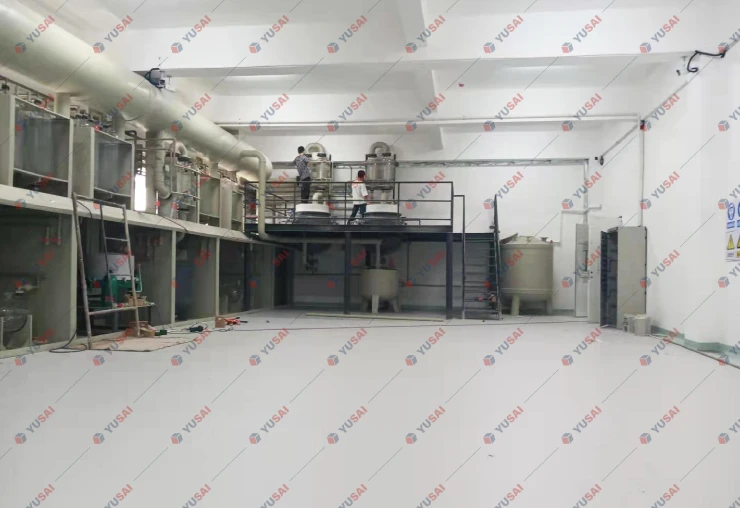
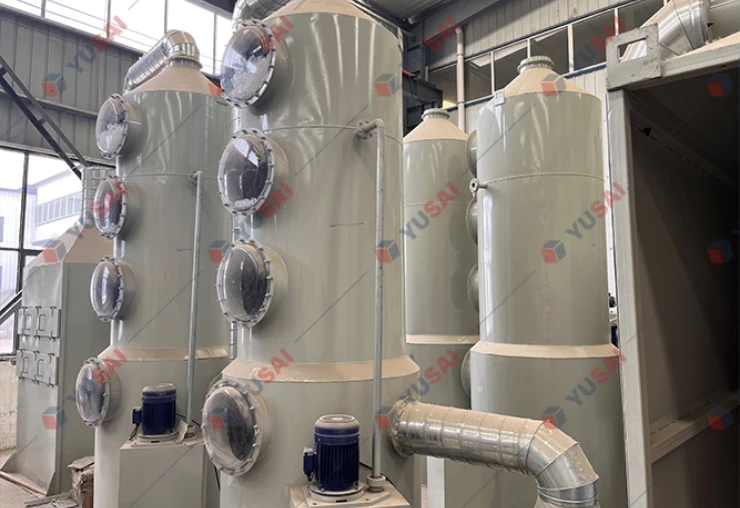
Acid mist waste gas is introduced into the purification tower through an air duct and passes through a packing layer. The waste gas undergoes a thorough gas-liquid two-phase contact, absorption, and neutralization reaction with a sodium hydroxide absorption solution. After purification, the acid mist waste gas is dehydrated and demisted by a demisting plate before being discharged into the atmosphere by a fan. The absorption solution is pressurized by a water pump at the tower bottom, sprayed down from the tower top, and then refluxed to the tower bottom for recycling. The purified acid mist waste gas meets the emission requirements of Guangdong Provincial local emission standards, which are lower than national emission standards.
Features
- High dust removal and desulfurization efficiency, with a desulfurization efficiency of up to 85% when using alkaline scrubbing water.
- Small footprint and easy installation.
- Low water and power consumption indicators.
- Corrosion-resistant, non-abrasive, and long service life.
- Reliable operation and simple, convenient maintenance.
Structure
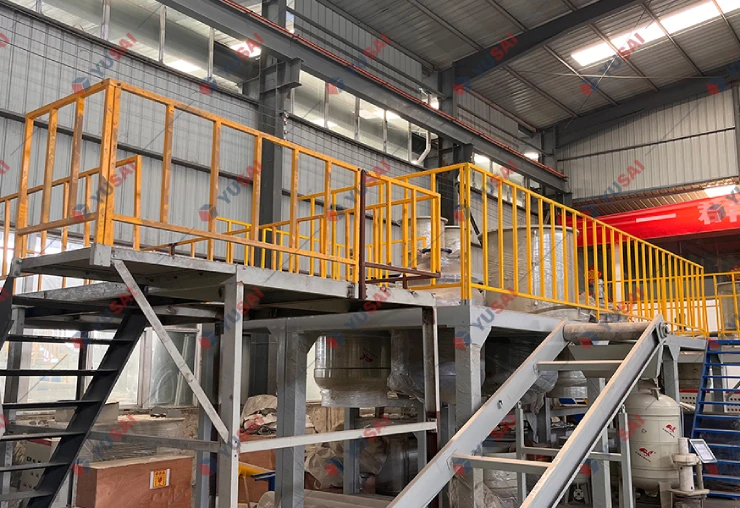
The PP flue gas absorption tower is used for industrial dust removal or waste gas treatment. It mainly consists of components such as a filter, multi-stage spray, dripper, and collection chamber. The packing layer inside the flue gas absorption tower serves as a mass transfer device for contact between gas and liquid phases. The bottom of the packed tower is equipped with a packing support plate, on which the packing is randomly placed. A packing pressing plate is installed above the packing to prevent it from being blown by the rising gas flow. The spray liquid in the flue gas absorption tower is sprayed onto the packing from the tower top through a liquid distributor and flows down along the packing surface. The gas is fed from the tower bottom, distributed by a gas distribution device, and then continuously passes through the voids of the packing layer in a countercurrent manner with the liquid. On the packing surface, the gas and liquid phases closely contact for mass transfer. When the liquid flows down along the packing layer, wall flow may sometimes occur, causing uneven distribution of the gas and liquid phases in the packing layer and reducing the mass transfer efficiency. Therefore, the packing layer inside the flue gas absorption tower is divided into two sections, with a redistribution device installed in the middle to redistribute and spray onto the lower packing layer.
Application Precautions
- Adjustment of circulating water volume: Determined by the water supply pump of the flue gas absorption tower. When operating one boiler, only one pump needs to be turned on. When two or three boilers are operated simultaneously in winter, both water pumps should be turned on. The flow rate of the slurry pump should be adjusted according to the flow rate of the circulating pump to make them equal.
- Dosage in the dosing tank inside the flue gas absorption tower: When operating one boiler, add 2 bags of alkali and 5 bags of hydrated lime. When operating two or three boilers in winter, increase the dosage accordingly.
- The sedimentation tank of the flue gas absorption tower should be cleaned frequently, once a week in summer and every three days in winter.
- When discharging sewage from the ash-water separator, discharge it once per shift. Open the sewage discharge valves separately until clear water is discharged.
- Regularly inspect and lubricate the above rotating components, and promptly troubleshoot any faults to ensure the desulfurization effect of the flue gas absorption tower.
- Exercise caution when adding chemicals on the upper and lower stairs, and maintain self-protection and mutual protection awareness.
- Clean up the site promptly after work is completed, ensuring a clean workplace when leaving.