Purification of Ruthenium Absorption Solution
A small amount of ethanol is added to a high-concentration ruthenium absorption solution, which is then heated to 75-90°C to expel free chlorine gas, keeping ruthenium in the stable H2RuCl6 state. Subsequently, an appropriate amount of hydrogen peroxide or nitric acid is added to re-oxidize osmium in the solution to osmium tetroxide, which then volatilizes (connected to an alkali solution absorption system for OsO4 recovery). If the chlororuthenic acid solution contains a high level of impurities, it can be purified by re-precipitation followed by oxidation distillation using two methods:
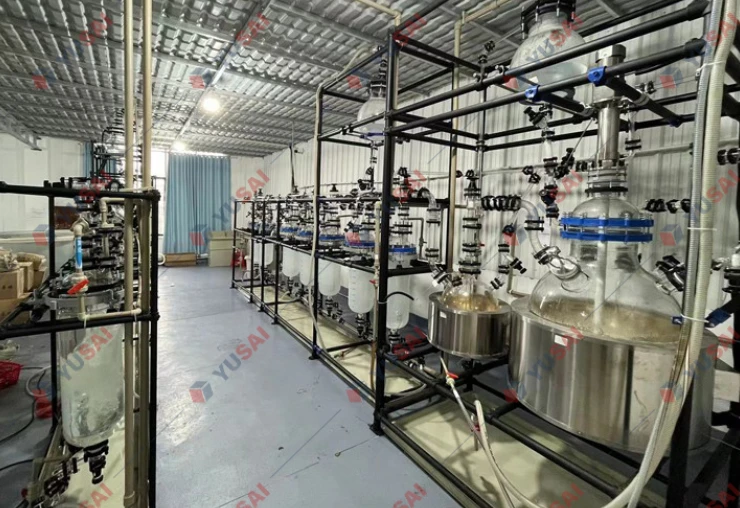
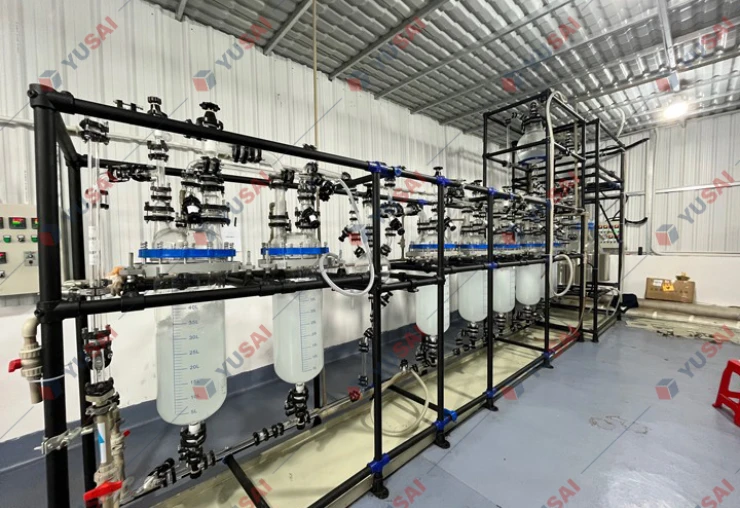
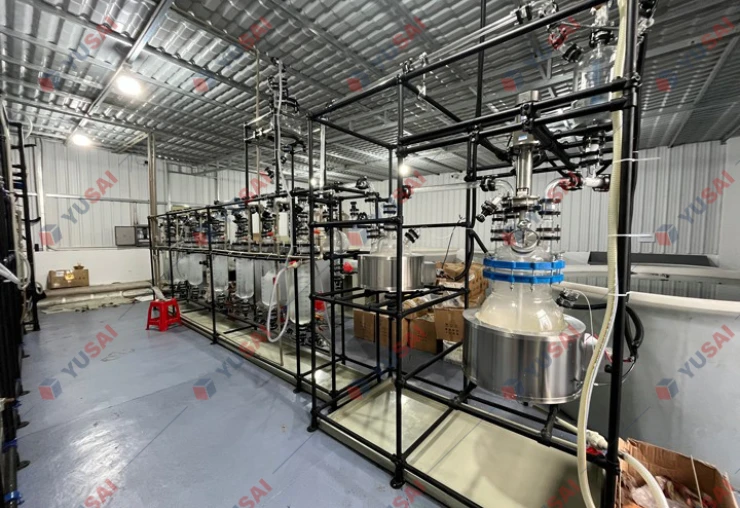
- The ruthenium solution is concentrated to near dryness to remove acid, then dissolved in water. The pH is adjusted to 1 using a dilute alkali solution, and the solution is transferred to a distillation flask. A negative pressure absorption system with hydrochloric acid solution is connected. A 20% NaOH solution is added while simultaneously dropping in a 20% NaBrO3 or NaClO3 solution. The mixture is heated to distill RuO4 until no blue color is detected at the outlet using a thiourea cotton ball. A pure sodium chlororuthenate absorption solution is obtained.
- The ruthenium solution is neutralized with NaOH to precipitate Ru(OH)3. The filtered precipitate is slurried with pure water and transferred to a distillation apparatus. A negative pressure system with hydrochloric acid solution is connected. H2SO4 is dropped into the distillation apparatus while simultaneously dropping in a 20% NaBrO3 or NaClO3 solution. RuO4 is distilled out by heating, and a pure sodium chlororuthenate absorption solution is obtained. Regardless of the oxidation and redistillation method used, the addition rate of the oxidizing agent should be slow rather than fast. This is because RuO4 has poorer thermal stability than OsO4. If the concentration in the gas phase is too high, the temperature is too high, or a reducing agent is encountered during volatilization, RuO4 will undergo a disproportionation reaction and decompose rapidly (RuO4=RuO2+O2), or even explode, causing serious accidents.
Preparation of Metallic Ruthenium
- Precipitation and Calcination: The pure ruthenium absorption solution is slowly concentrated to a ruthenium content of 30-50 g/L. Ammonium chloride is added to precipitate deep red (NH4) 2RuCI6 crystals: H2RuCl6+2NH4Cl=(NH)2RuCl6↓ +2HCl. The filtered precipitate is washed with ethanol and then placed in a hydrogen reduction furnace. It is dried at low temperature in a hydrogen stream and slowly heated to 450-500°C to decompose the ammonium salt, and then further heated to 950°C for calcination and reduction. After cooling to room temperature, metallic ruthenium powder is obtained: 3(NH4)2RuCl6=3Ru +16HCl +2NH4C1+2N2. The ruthenium powder is immediately transferred to a closed desiccator to prevent oxidation and volatilization losses in the air, with a purity of >99.9%.
- Product Standards: The enterprise standards of Kunming Institute of Precious Metals are as follows: No. 1 ruthenium (Precious Ru-1) contains 99.98% Ru, No. 2 ruthenium (Precious Ru-2) contains 99.95% Ru, and No. 3 ruthenium (Precious Ru-3) contains 99.9% Ru