Chemical Method
The chemical method, specifically the chemical gold leaching and reduction process, involves dissolving gold using a leaching reagent and then selectively precipitating gold by adding a reducing agent to achieve gold purification. Traditional methods for chemically dissolving gold include aqua regia dissolution and controlled-potential chlorination dissolution, with solvents such as aqua regia, chlorine gas, and sodium chlorate. The main reactions for dissolving gold are as follows:
Au+HNO3+3HCl→AuCl3+NO+2H2O
2Au+ClO3+6H+7Cl→2AuCl4+3H2O
The aqua regia method for gold purification is suitable for materials with a silver content below 8%. Silver is precipitated as silver chloride and separated. The alloyed gold is quenched into a powder or filtered electrolytic gold sludge is placed in a heat-resistant glass or polypropylene plastic container. For each portion of gold, 3–4 portions of aqua regia are added in several batches, and dissolution is carried out under heating. After dissolution, the mixture is allowed to stand, filtered, concentrated to remove nitrous oxides, and then reduced using sodium sulfite, ferrous sulfate, or oxalic acid to obtain sponge gold. The sponge gold is washed, boiled twice in dilute nitric acid, washed to neutrality, dried, and then cast into ingots, achieving a gold purity of 99.9% or higher. This process offers advantages such as low investment and a short production cycle. However, several considerations must be taken into account when using the aqua regia method for gold purification:
- To facilitate rapid gold dissolution, the raw material should have a large surface area and be in a highly dispersed state.
- The silver content in the material should be low. High-silver materials (with a silver mass fraction greater than 8%) can cause the formation of silver chloride, which covers the gold surface and hinders gold dissolution.
- Aqua regia dissolution generates a significant amount of nitrogen oxide fumes, necessitating gas collection and purification to meet relevant environmental requirements before discharge.
Electrolytic Method
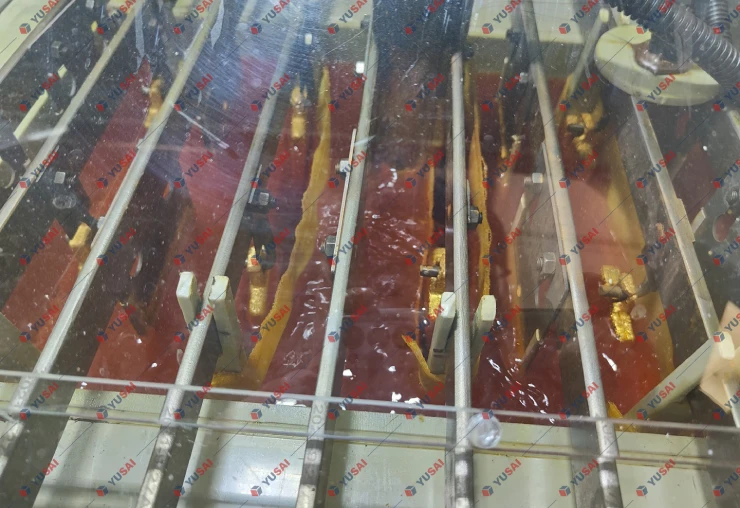
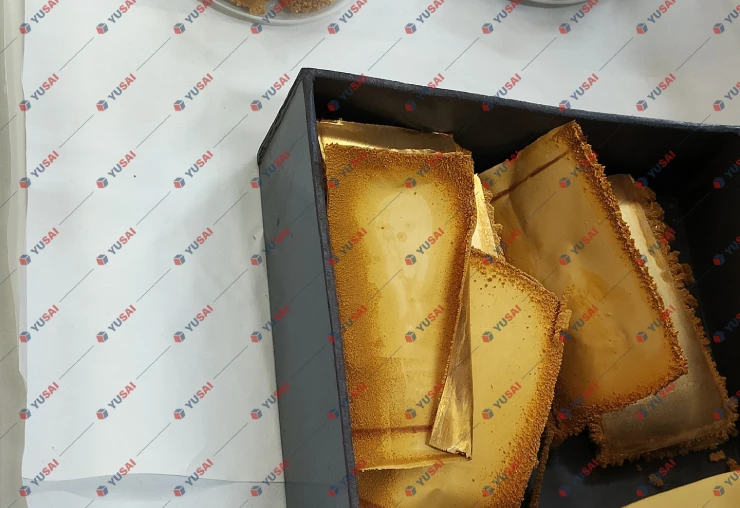
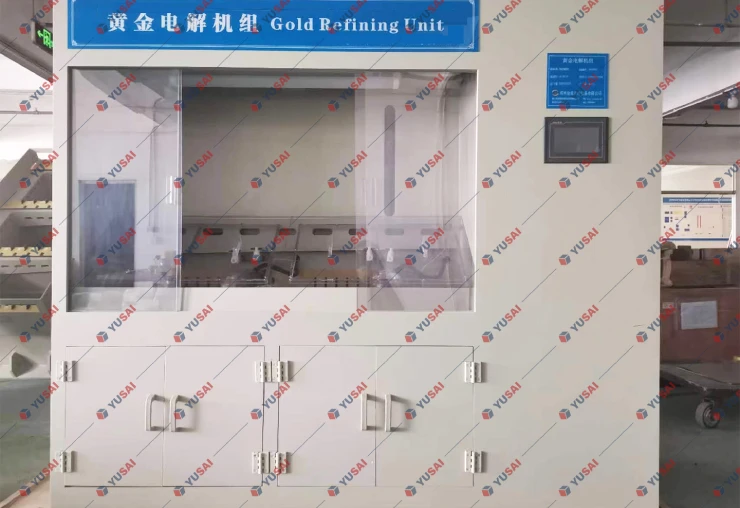
The electrolytic method typically requires crude gold with a gold mass fraction of 90% or higher as the raw material. The crude gold is cast into an anode, while pure gold or a titanium plate serves as the cathode. The electrolyte consists of a chloroauric acid aqueous solution with free hydrochloric acid. During gold electrolytic refining, gold dissolves from the anode to form Au³⁺ ions, which migrate to the cathode and are deposited there. When the specified level of deposition is reached, the cathode is removed, purified, and cast into ingots, achieving a gold purity of 99.99% or higher.
As the electrolysis progresses, various impurity elements with lower electronegativity than gold also dissolve into the solution through electrochemical reactions, but their concentrations remain low and they do not precipitate at the cathode. The harmful impurities in the anode are silver and copper. Excessive silver content can lead to the formation of silver chloride after electrochemical dissolution, which adheres to the anode surface and causes passivation, becoming more severe when the anode contains more than 6% silver. To mitigate this effect, during gold electrolytic refining, both direct current and alternating current are introduced into the electrolytic cell to create an asymmetric pulsating current that eliminates the influence of silver. Excessive copper content can lead to copper deposition at the cathode, affecting the quality of the electrolytic gold. Therefore, the copper content in the anode should not exceed 2%. Fresh electrolyte is prepared by dissolving gold, with two methods available: aqua regia dissolution and electrolytic dissolution. Gold is recovered from spent electrolyte using reduction precipitation. If the incoming material contains high levels of impurities, the electrolyte must be frequently regenerated or the impurities in the incoming material must be removed in advance.
This process offers advantages such as stable operation, ease of control, low pollution, and low labor intensity. However, it has drawbacks such as a long production cycle (2–3 times longer than that of chemical refining) and significant gold occupancy in the electrolyte (approximately 4 kg of gold is tied up in the electrolyte for a 10 kg/day gold electrolysis operation).
| Process | Raw Material Requirements | Single Batch Cycle Time | Recovery Rate | Purity (Fineness) | Cost (CNY/gram) | Advantages and Disadvantages |
| Aqua Regia Method | ω(Au)>75%ω(Ag)<8% | 8-12h | ≥99.8% | ≥99.99% | 0.12 | Short process flow, generates nitrogen oxides, and causes significant pollution. |
| Electrolytic Method | ω(Au)>90%ω(Ag)<6%ω(Cu)<2% | 1-2 Days | ≥99.9% | ≥99.99% | 0.02 | Stable process with a long cycle time and substantial gold inventory buildup. |